
In-Clinic Microcurrent: Short-Term Boost
Professional microcurrent treatments use slightly stronger currents than at-home devices, but still operate at low energy levels. Rather than producing sustained muscle contraction, they tend to create muscle twitching and improved lymphatic drainage.
Patients often notice a temporary lift or reduction in puffiness, but these results are typically short-lived — around 72 hours — and are not due to true muscle strengthening.
Bottom line: Best reserved as a short-term boost before an event, rather than a long-term strategy.

EMFACE combines high-intensity facial electrical stimulation (HIFES) with radiofrequency (RF), allowing it to target both muscle tone and skin quality in a single treatment.
Unlike microcurrent, HIFES produces sustained muscle contractions, which can lead to measurable improvements in muscle tone. Clinical studies — although largely manufacturer-led — suggest around 30% improvement in muscle tone and approximately 28% increase in collagen production.
Treatment involves a course of four sessions, with results developing gradually over several weeks and requiring maintenance every three to six months.
While EMFACE represents a step forward in non-invasive facial toning, results remain subtle and natural-looking rather than dramatic.
Bottom line: One of the few treatments that genuinely works on muscle tone, but requires commitment and realistic expectations.
HIFU: The Generic Alternative to Ultherapy
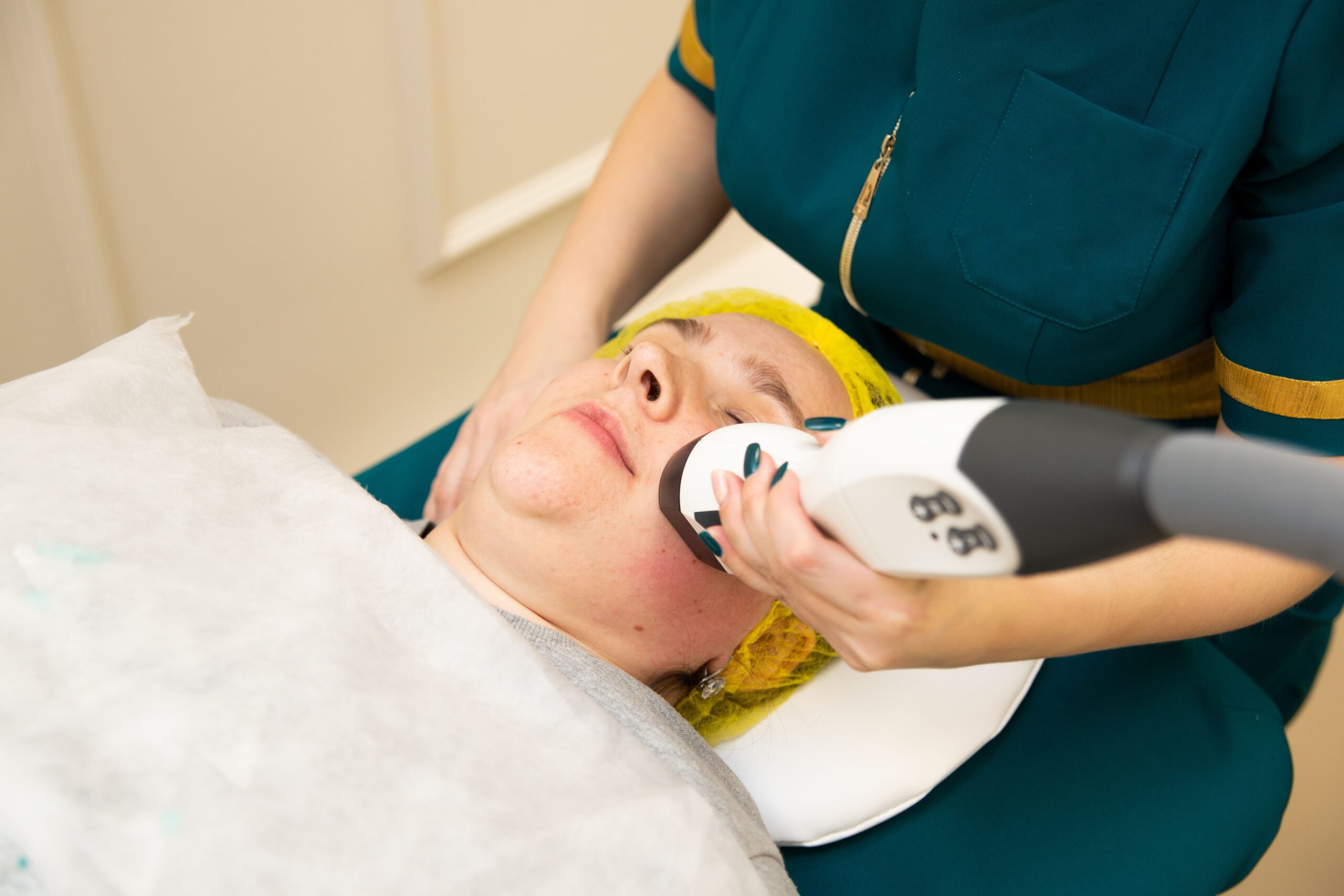
HIFU (High-intensity focused ultrasound) – is the broader category of technology that Ultherapy belongs to, but the term is now used to describe a wide range of devices, including many lower-cost, generic machines available across high street clinics and salons.
Like Ultherapy, HIFU works by delivering focused ultrasound energy down to the SMAS layer, creating small zones of thermal coagulation. This triggers collagen contraction and remodeling over the following months, gradually tightening the skin from within — it does not tone or strengthen the underlying muscle.
The evidence base for HIFU has grown substantially. A systematic review of 45 clinical trials and cohort studies found that HIFU produced meaningful improvements in skin laxity — in the region of 18 to 30% — particularly in the lower face, neck, and periorbital areas, with a favourable safety profile and a low rate of significant side effects. Results typically become visible from around three months, continuing to improve for up to six.
The key caveat is consistency between devices. Unlike Ultherapy, which is FDA-cleared with standardised depth and energy parameters and real-time ultrasound imaging to confirm placement, generic HIFU machines vary considerably — in focal depth accuracy, energy delivery, and build quality. This means results can be far more operator- and device-dependent, and in the UK and US, most generic HIFU use for facial lifting remains an off-label application rather than a specifically approved indication.
Bottom line: A reasonable, evidence-supported option when delivered by an experienced practitioner on a well-maintained device — but the variability between machines means results are less predictable than with Ultherapy.
Ultherapy: Deep Structural Tightening
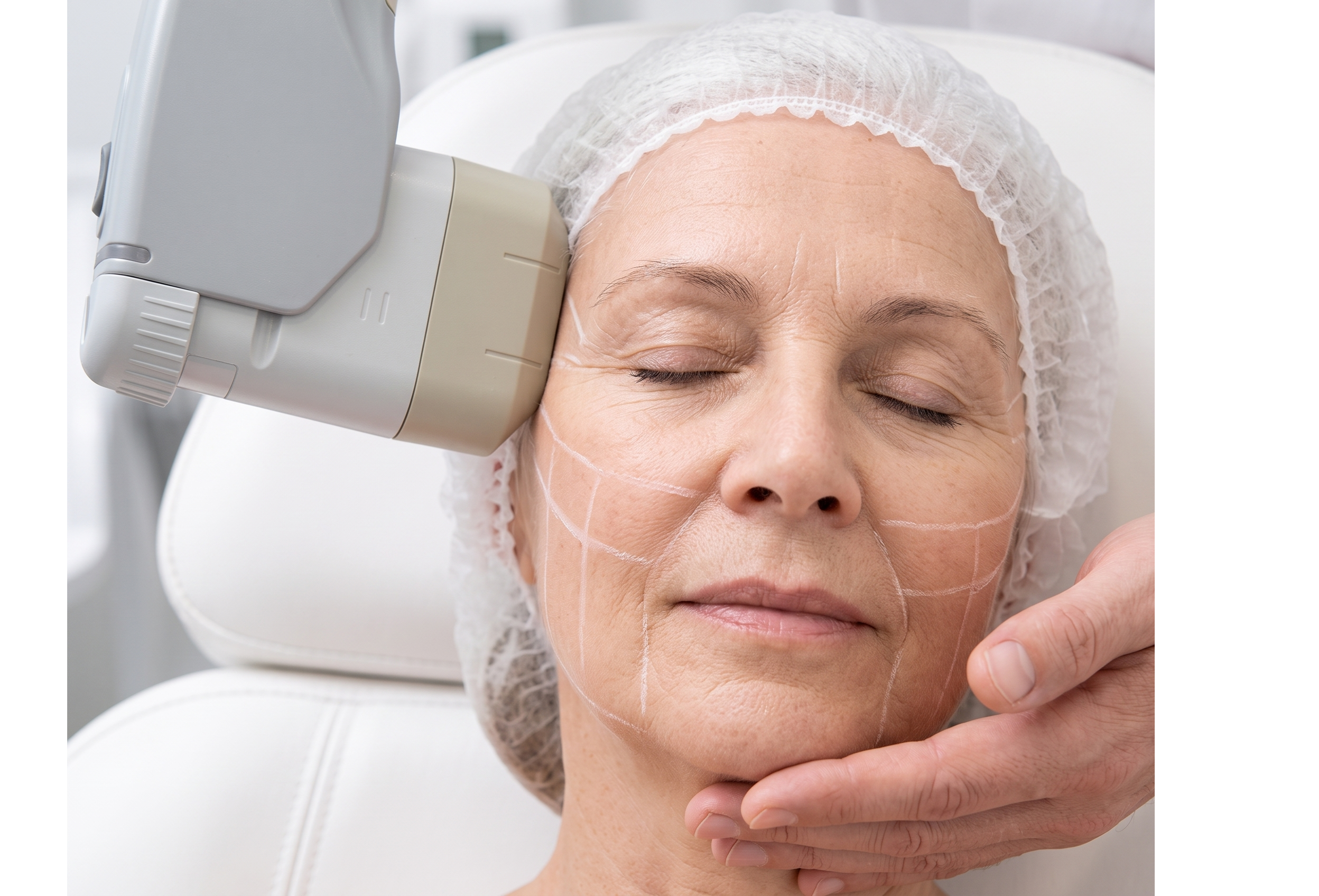
Ultherapy uses micro-focused ultrasound to deliver energy deep into the tissue, reaching the SMAS layer. This stimulates collagen production and gradually tightens the structural support of the face.
Although it operates at the same depth as facial muscles, Ultherapy does not tone muscle directly. Instead, it works by tightening and lifting the surrounding tissue, improving overall contour.
It is one of the more well-studied non-invasive treatments, with results developing over three to six months and lasting up to a year. However, outcomes are typically modest, and the treatment is a significant financial investment.
Bottom line: A good option for non-surgical lifting if you are looking for gradual, longer-lasting improvement without surgery, with the most consistent and well-documented evidence base of any ultrasound-based treatment.
Conclusion
When it comes to facial muscle tone, it’s important to separate perception from reality.
Many at-home options promise lifting and toning, but in practice, they offer subtle, temporary improvements that require ongoing effort. In-clinic treatments, particularly those that achieve true muscle contraction or reach the SMAS layer directly — EMFACE, HIFU, and Ultherapy — provide more meaningful results, although these are still gradual and require realistic expectations.
Among the ultrasound-based options, the choice between generic HIFU and Ultherapy often comes down to budget versus predictability: both work on the same principle and target the same layer, but Ultherapy’s standardisation and depth of evidence make it the more reliable choice, while well-delivered HIFU remains a reasonable, more accessible alternative.
Ultimately, the most effective approach is not about choosing one treatment in isolation, but understanding how each fits into a long-term, layered strategy that supports both skin quality and structural integrity.
If you would like guidance on which treatments may be appropriate for your skin and facial structure, you can book a consultation here to develop a personalised plan focused on long-term skin health and natural results.
Read Dr. Miriam’s latest blogs
Facial layer 3: Toning your facial muscles – Comparing Face Yoga, Microcurrent, EMFACE, HIFU, and Ultherapy (Part 1)


How to Tighten the SMAS Layer and Deep Facial Fat: The Real Secret to Lifting Sagging Jowls
Join Dr. Miriam’s Newsletter
Join our mailing list to receive Dr. Miriam’s seasonal skin care tips, her latest discoveries and special offers
You can unsubscribe at any time by clicking the link in the footer of our emails. For information about our privacy practices, please visit our website.